
Why it matters
The producer
Zorzettig has been making wine in the hills east of Udine since 1874. The estate is headquartered at Spessa, a hillside locality within Cividale del Friuli, and its vineyards spread across four named territories in the Colli Orientali del Friuli, the DOC zone that covers the sloping ground between the Natisone and Judrio rivers before the land rises toward Slovenia. Annalisa Zorzettig runs the estate today, continuing the work of her father. Fabio Coser is the winemaker. Together they farm 115 hectares and produce around 800,000 bottles a year.
The range is built around native Friulian varieties. Friulano, the white grape most closely identified with the region, grows at Spessa alongside Ribolla Gialla, Picolit, and Pignolo, the four grapes that define what is locally distinctive about Colli Orientali. International varieties, Pinot Grigio at Casali Pasch and Pinot Nero across the estate, share the portfolio without displacing that native core. The house style runs toward freshness, mineral character, and clean fruit.
Place and vineyards
Where the wines begin
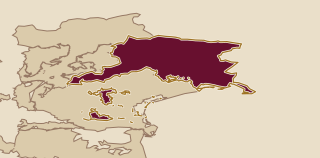
Colli Orientali del Friuli sits in the far northeast of Italy, where the Friulian hills fold toward the Slovenian border. The climate sits between two large influences: the Alps block cold air from the north, and the Adriatic, roughly 50 kilometres away, pushes warm maritime breezes inland. The Alps protect the vineyards from cold northern winds, and Adriatic sea breezes influence them. That temperature range is part of why the wines hold acidity alongside ripe fruit.
Zorzettig's four territories, Spessa around the winery, Ipplis a short distance east, Prepotto to the south, and Premariacco upstream along the Torre river valley, each sit on hillside slopes that capture morning sun and drain cold air overnight. The elevation and aspect vary between sites, which gives the winemaker material to work with across the range.
In the cellar
Vineyards and cellar
Spessa is the home territory, surrounding the winery, planted to Friulano, Ribolla Gialla, Picolit, and Pignolo. These are the grapes most rooted in Colli Orientali: Friulano gives broad, textured whites; Ribolla Gialla brings high acidity and citrus-driven fruit; Picolit, one of Italy's rarest grapes, produces a late-harvest wine of concentrated sweetness and natural low yields; Pignolo, a red variety that nearly disappeared from Friuli before a small group of producers revived it, gives deeply coloured, structured wine with dark fruit and firm tannin.
Ipplis holds the estate's oldest vines, some rootstocks a century old. The age of the vine affects yield and concentration: old vines produce fewer clusters, and each cluster carries more flavour per berry.
Wines to know
The range in view
The Zorzettig range is a single-level portfolio of single-variety wines, each labelled by grape and site under the Colli Orientali del Friuli DOC. There is no prestige tier or reserve hierarchy in the available information. Native and international varieties sit together across the range.
Friulano is the white anchor, a grape that in Colli Orientali gives wines with almond, white stone fruit, and a slightly bitter finish that is characteristic of the variety. Ribolla Gialla runs leaner, with pronounced acidity and citrus, often showing lemon pith and green apple. Picolit is a rare dessert wine, low-yielding and naturally high in sugar at harvest, with apricot, honey, and dried-flower concentration. Pignolo, the native red, carries dense dark fruit, iron-edged tannin, and enough acidity to age.
A useful way in
A bottle to begin with
Start with the Pinot Nero. The 2023 is 100% Pinot Noir from Colli Orientali ponca vineyards, and it carries enough specific sensory information to make clear what Zorzettig does with its fruit. Morello cherry, raspberry, and wild strawberry on the nose, with violet and a touch of white pepper behind. The palate is supple and fresh, the tannins silky rather than gripping, and the finish clean and fruit-driven. It is not a heavy wine: Zorzettig's ponca soils and cool-night climate produce a Pinot Nero built around fragrance and grip rather than weight. The price sits in approachable territory for the appellation, and the style is legible to any buyer who knows northern Italian reds.