
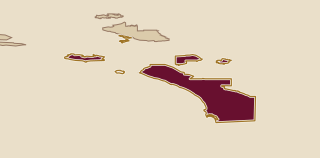
South Coast covers Los Angeles, Orange, Riverside, San Bernardino and San Diego counties, with 13 named appellations. A South Coast AVA label may name the broad, multi-county appellation or one of the smaller AVAs within it, including Ramona Valley, San Pasqual Valley and Temecula Valley.
The region does not share one climate. Pacific air moderates many vineyards, while Temecula relies on altitude and Antelope Valley sits beyond the Sierra Pelona Mountains, where large day-to-night temperature shifts help wines keep their balance and freshness. Northern mountains have rocky shale soils; nearer the Mexican border, granitic soils are more common. Lower AVAs often have sand, and drainage is a common advantage.
Cucamonga Valley shows how much has changed. Its Guasti vineyards covered more than 20,000 acres in 1917, before the area declined to a small remnant of old-vine and fortified-wine production. Cabernet Sauvignon, Syrah and Chardonnay are important varieties across South Coast, alongside dense, brambly Zinfandel from old vines.
Inside the region
2 named areas
Each guide keeps its place within California · South Coast clear, with a direct route back to the map.
- 01Inland Empire & San DiegoNo producers listed yetThis South Coast area includes appellations in the Inland Empire and San Diego County. Ramona Valley's cool nights and San Pasqual Valley's broad mix of grapes give a useful sense of its range.
- 02Los Angeles & Ventura2 producersLos Angeles & Ventura includes several South Coast appellations. Malibu Coast offers a clear view of the area's maritime conditions, where fog, sunshine and large daily temperature shifts shape the growing season.