
Why it matters
The producer
Bacalhôa Vinhos de Portugal sits in Vila Nogueira de Azeitão, a small town on the Península de Setúbal south of Lisbon, and it runs at two very different speeds. At one speed: 1,200 hectares of vineyards, 40 farms, 40 grape varieties, and a production capacity of 20 million litres per year spread across seven Portuguese wine regions. At the other: a narrow, deeply specific fortified wine called Moscatel de Setúbal, made from one grape on north-facing limestone slopes in the Arrábida mountain range, using a technique that involves stopping the ferment, macerating the skins through winter, and then ageing the wine in small oak casks for one to fifteen years.
In 2005, the João Pires name disappeared. Bacalhôa Vinhos de Portugal took its place, named after the palace and the wider estate. In 2007 the company acquired Caves Aliança, a leading Portuguese sparkling wine and spirits producer. By the time the company reached its centenary in 2022, it operated across most of Portugal's major wine regions from a single headquarters in Azeitão.
Place and vineyards
Where the wines begin
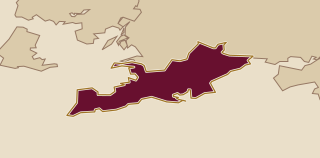
The Península de Setúbal is a wedge of land between the Tagus and Sado estuaries, roughly thirty kilometres south of Lisbon. The Arrábida mountain range runs along its southern edge, facing the Atlantic. North-facing slopes here catch less direct sun than the Alentejo plains a hundred kilometres east, which keeps the Moscatel grapes from ripening past the threshold where their aromatic freshness tips into baked sweetness.
The Moscatel de Setúbal appellation is built around one grape, Moscatel de Setúbal, a Muscat variety also known as Moscatel de Alexandria, grown within this specific peninsula denomination. The appellation requires fortification during fermentation and extended skin contact, both of which concentrate the grape's naturally intense aromatic character without letting it become cloying. North-facing Arrábida limestone is the physical address that keeps the wine alive: the acidity holds up against the residual sugar, giving each bottle its length.
In the cellar
Vineyards and cellar
The Moscatel production starts with hand-harvested grapes from the Arrábida vineyards. Fermentation begins as it would for any sweet white wine, then stops. When the fermenting must reaches roughly five percent alcohol, Bacalhôa adds grape spirit to arrest the yeast. Sugar stays in the wine; the alcohol climbs to seventeen percent. The must then rests in tank in contact with the skins for two to three months before being moved into previously used small oak barrels for one year. For the Superior 10 Anos, the skin maceration extends through winter, five to six months, before transfer to 225-litre oak casks for a minimum of fifteen years.
Wines to know
The range in view
Bacalhôa makes wines across seven Portuguese regions, including still reds and whites from the Alentejo, and a range of sparkling wines through Caves Aliança. The two Moscatel de Setúbal expressions are described below.
The D.O. Moscatel is the entry-level bottling: 100% Moscatel de Setúbal from Arrábida vineyards, fermentation-arrested, aged one year in used oak. The 2022 vintage is topaz in colour, with aromas of muscat flower, orange blossom, citrus peel, candied fruit, tea leaf, and dried raisins. In the mouth it is full-bodied with a clear push of sweetness held against enough acidity to keep the finish from collapsing. Orange peel and raisin persist.
A useful way in
A bottle to begin with
The Bacalhôa Moscatel de Setúbal D.O. is the right first bottle from this producer. It is a fortified sweet white wine from 100% Moscatel de Setúbal grapes grown on north-facing Arrábida limestone, fermentation-arrested at five percent alcohol, macerated on skins for two to three months, then aged one year in used oak barrels. The wine reads as a direct expression of the grape and the appellation method before extended oak time introduces oxidative complexity. Orange blossom, citrus peel, and raisin on the nose. Full body, bright acidity, and a long finish with bitter-sweet note from the skin contact. Serve it lightly chilled as an aperitif or with pastéis de nata.