
Why it matters
The producer
Cantine Lombardini makes sparkling red Lambrusco from Novellara, a town in the Reggio Emilia province of Emilia-Romagna. Their wine is Il Campanone, a Reggiano DOC Lambrusco Rosso produced by the Charmat method. It is frizzante rather than fully sparkling, dark ruby with violet highlights, and built around a core of fresh red and black berry fruit at a measured 11% alcohol.
The house is a family-owned bottler with multiple generations in the Novellara town center, and Il Campanone is the bottle they are known for. It is a high-volume wine that competes on a judged international stage: the 2020 vintage earned a silver medal and 90 points at the International Wine Challenge.
Place and vineyards
Where the wines begin
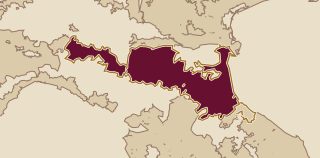
Novellara sits in the Po Valley flatlands of Reggio Emilia province, in the northern arc of Emilia-Romagna. The Reggiano DOC is the appellation here, a designation that runs across the province and covers several sub-varieties within the Lambrusco family of dark-skinned grapes native to Emilia-Romagna.
The DOC shapes what goes into Il Campanone at the varietal level: Lambrusco grapes grown within the Reggiano zone. The flat, fertile plain produces Lambrusco with generous fruit and moderate natural acidity. That combination, dark berry character from the grape, freshness from the climate, and the frizzante effervescence from the Charmat method, defines the wine's weight and drinkability. At 7 g/L total acidity and 11% alcohol, the wine belongs to a style made for the table rather than the cellar.
In the cellar
Vineyards and cellar
Il Campanone is produced by the Charmat method, in which the base wine undergoes a second fermentation inside a pressurized tank rather than in individual bottles. The Charmat process preserves the fresh fruit aromatics of the Lambrusco grape directly: the short fermentation time and controlled temperature keep blackberry, raspberry, and cherry character vivid in the finished wine rather than developing the toasty, yeasty complexity associated with longer bottle contact. The resulting mousse is fine and well-integrated, with a gentle effervescence suited to the frizzante style rather than the more aggressive bubble of a fully spumante wine.
The wine is bottled at 11% alcohol, with 11 g/L residual sugar balanced by 7 g/L total acidity. The Charmat method and this sugar-acid balance are the two production decisions that define the wine's character in the glass: approachable and berry-forward, with enough acidity to keep it lively and enough residual sweetness to round the palate without tipping into obviously sweet territory.
Wines to know
The range in view
Il Campanone Reggiano DOC Lambrusco Rosso is the house wine and the only bottle covered by verified sources. It is a frizzante sparkling red, not a still wine and not a fully sparkling spumante. The distinction matters: frizzante carries lighter, softer bubbles, and the wine is intended to be poured cold and drunk young rather than aged.
The colour is intense ruby red with violet highlights, a visual cue to the Lambrusco grape's dark pigmentation. On the nose, the wine leads with blackberry, blueberry, raspberry, and black cherry, alongside delicate floral notes of violet, a slight herbal edge, and a touch of spice. The palate is described by the producer as dry in character, though the 11 g/L residual sugar gives it a rounded, approachable feel. Acidity is moderate at 7 g/L, enough to give the wine lift and balance the fruit without making it tart. The overall profile is berry-forward, youthful, and lively, built for immediate drinking at a cold serve temperature of 8 to 10°C.
A useful way in
A bottle to begin with
Il Campanone Reggiano DOC Lambrusco Rosso is the one bottle here. It is a frizzante sparkling red made from Lambrusco grapes in the Reggiano DOC around Novellara, produced by the Charmat method, and built for the table rather than the cellar. Dark ruby with violet highlights, fine bubbles, and a nose of fresh blackberry, raspberry, and cherry. In the mouth it is rounded and lively, with enough residual sugar to feel welcoming and enough acidity to stay clean. Serve at 8 to 10°C. It works alongside cured meats, pizza, or the kind of pasta that benefits from a wine with some fruit weight and gentle fizz.