
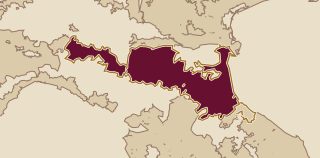
Ortrugo tells one part of Emilia-Romagna's wine story. In Colli Piacentini, it became a separately vinified wine in the 1970s after time as a blending grape. It comes sparkling, still or spumante, usually light, delicate and dry-bitterish. Colli Bolognesi Pignoletto may be fresh and sparkling or still, with structure developed through long ageing; Classico Superiore cannot be released before 4 October. Colli di Parma combines Barbera and Bonarda with Malvasia di Candia, Sauvignon, Chardonnay and Pinot, with perfumed, versatile Malvasia di Candia Aromatica as its defining grape. Romagna Sangiovese from clay-limestone sub-zones has lively fruit, measured warmth and incisive tannin. Bosco Eliceo's sandy coastal terroir brings salty, savoury character to its wines.
Inside the region
6 named areas
Each guide keeps its place within Emilia-Romagna clear, with a direct route back to the map.
- 01Colli Bolognesi (Bologna)2 producersColli Bolognesi includes Colli Bolognesi Classico Pignoletto, Colli Bolognesi and Reno. Pignoletto may be fresh and sparkling, or a still wine whose structure develops through long ageing.
- 02Colli di Parma & Reggiano4 producersColli di Parma & Reggiano includes Colli di Parma, Colli di Scandiano e di Canossa and Reggiano. Colli di Parma combines red Barbera and Bonarda with several white grapes, especially perfumed, versatile Malvasia di Candia Aromatica.
- 03Colli Piacentini (Piacenza)4 producersColli Piacentini includes the Colli Piacentini, Gutturnio and Ortrugo dei Colli Piacentini appellations. Its Ortrugo comes in sparkling, still and spumante versions, typically light, delicate and dry-bitterish.
- 04Ferrara & Adriatic Plain2 producersFerrara & Adriatic Plain includes Bosco Eliceo. The denomination's sandy coastal terroir gives its wines a distinctive salty, savoury character.
- 05Lambrusco Country (Modena & surrounds)5 producersLambrusco Country (Modena & surrounds) is a wine area within Emilia-Romagna. Its four listed appellations are Lambrusco di Sorbara, Lambrusco Grasparossa di Castelvetro, Lambrusco Salamino di Santa Croce and Modena.
- 06Romagna Hills (Forlì-Cesena, Ravenna, Rimini)7 producersRomagna Hills includes five listed appellations, among them Romagna Albana and Romagna. Sangiovese from its clay-limestone sub-zones has lively fruit, proportionate warmth and balanced, incisive tannins.
Producer profiles
Producer profiles
Open the full directory when you want every producer currently placed in Emilia-Romagna.
- Azienda Acricola Il MaioloFamily estate in the Val Nure hills of Piacenza, farming ten hectares without synthetic inputs since the mid-1970s and producing long-aged reds from Barbera, Bonarda, and a five-variety white from a high-altitude Travo parcel.
- Azienda Agricola Il PoggiarelloOrganic family estate in Val Trebbia, Piacenza, farming native varieties and making still and sparkling wine across five generations of the Ferrari-Perini family.
- Azienda Agricola Sartori LucianoMonterosso Val d'Arda producer making white and sparkling wines with spontaneous fermentation in steel and the Martinotti method.
- Cantine CECI S.P.ACantine CECI grew from a Bassa Parmense trattoria into a dedicated winery, with Otello Nero di Lambrusco as its flagship red.
- Cantine Lombardini S.r.lCantine Lombardini makes Il Campanone, a Reggiano DOC Lambrusco Rosso frizzante from Novellara in Emilia-Romagna: dark ruby, berry-driven, Charmat-method sparkling red at 11% alcohol with fine, well-integrated bubbles.
Browse 13 more
- Cantine Riunite & CIV - Soc. Coop. Agr.A Reggio Emilia cooperative founded in 1950 by nine grape farmers, now representing more than 1,400 growers across two provinces and distributing Lambrusco to over 100 countries.
- Chiara CondelloChiara Condello farms 4.8 hectares of Sangiovese in Predappio, a hillside DOC in Emilia-Romagna, making two unfiltered reds from organically certified calcareous-clay parcels between 150 and 300 metres above sea level.
- Cleto Chiarli Società AgricolaLambrusco estate in Modena province, founded in 1860, making estate-grown Grasparossa and Sorbara from the converted Villa Cialdini and VIVA-certified vineyards across three Modena sites.
- Condé Azienda VitivinicolaSingle-variety estate in Fiumana di Predappio, Emilia-Romagna, making Sangiovese Piccolo from two hillside expressions and releasing wines only when the tannins have reached elegance in bottle.
- Fattoria MorettoA third-generation Castelvetro estate farming Grasparossa exclusively on the Monte Barello hillside, making dry organic Lambrusco with firm tannin and dark fruit.
- Fattoria Nicolucci di Nicolucci AlessandroOld-vine Sangiovese from a clifftop village in Romagna's hills, farmed by one family since 1885 on dry, mineral, clay-heavy soils.
- Mirco MariottiNatural wine estate in Bosco Eliceo, 300 metres from the Adriatic, farming ungrafted century-old vines in coastal sand and making ancestral-method sparkling wine from Fortana, Trebbiano Romagnolo, and Malvasia di Candia Aromatica.
- Poderi dal NespoliPoderi dal Nespoli makes Romagna wines in Nespoli, from Nespolino blends to Il Nespoli Sangiovese Riserva.
- Poderi Fiorini Soc. Agric. S.s.Modena family estate founded in 1919, farming organically across three vineyard holdings to produce Lambrusco di Sorbara, Grasparossa, and Colli Bolognesi still wines.
- Società Agricola Cantina del FrignanoA small organic estate in the Apennine foothills above Modena, making ancestral and classic-method sparkling wines from native Grasparossa and Malbo Gentile at 450 to 550 metres.
- Societa Agricola Fondo San GiuseppeOrganic Albana estate at 400 metres in the Brisighella hills of Romagna, making minimal-intervention dry white wine from a single hectare of forty-year-old vines.
- Umberto CesariFamily estate founded in 1964 in Emilia-Romagna, covering 355 hectares across eight holdings and producing over 3.5 million bottles each year from Sangiovese, Pignoletto, and international varieties.
- Zanasi Società Agricola S.S.Four-generation Modena hill estate farming clay-and-sand Apennine foothills since 1900, making Lambrusco di Sorbara from estate fruit with fresh cherry character and lively acidity.