
Why it matters
The producer
Christophe Rapeneau serves as Chairman of G.H. Martel, while Paul-Alexandre Rapeneau serves as Managing Director. The house maintains 58 hectares of vineyard estate, and its vineyards are certified High Environmental Value Level 3. The Rapeneau family has handed down Champagne heritage and know how across generations.
G.H. Martel's house style is fresh and mineral, with great acidity and delicacy. Charles de Cazanove adds a second Reims house to the group. It has been part of the Champagne story since 1811, and the Rapeneau family owns both houses as part of an integrated group.
Place and vineyards
Where the wines begin
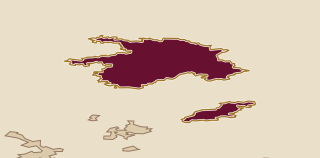
Reims is home to both houses, while G.H. Martel's vineyards extend across 64 villages in Champagne. A vineyard base spread across many villages gives a Champagne house multiple sources for composing cuvées, with Pinot Noir, Pinot Meunier and Chardonnay available from different parts of the region.
Chalk also shapes the cellar environment. Cool, stable underground conditions suit the secondary fermentation and lees ageing used for sparkling wine, allowing the wine to develop gradually while retaining acidity and fine effervescence. G.H. Martel's chalk crayères have been classified as a UNESCO World Heritage Site since 2015.
Wines to know
The range in view
Charles de Cazanove Brut is a dry, non vintage Champagne built from 60% Pinot Noir, 30% Pinot Meunier and 10% Chardonnay. Pinot Noir leads the blend, with Meunier adding a second red grape component and Chardonnay completing the composition.
G.H. Martel Victoire Brut Prestige uses 40% Chardonnay, 55% Pinot Noir and 5% Meunier. Pinot Noir remains the largest share, while Chardonnay makes up a substantial part of the blend and Meunier appears in a small proportion. The two wines present different grape balances within the Brut style.