
Why it matters
The producer
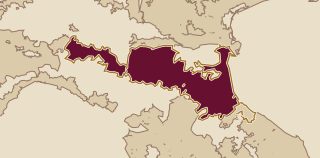
Cantina del Frignano is a small organic estate in the village of Pazzano di Serramazzoni, set in the Apennine foothills above Modena in Emilia-Romagna. It grows native Modenese varieties at elevations where Lambrusco producers almost never work, and makes ancestral and classic-method sparkling wines alongside still and dessert bottles from roughly 5 to 6 hectares of mountain vineyard.
The estate is listed by VinNatur, the association of natural wine producers, and its range reflects the mountain setting directly: the native Grasparossa and Malbo Gentile that anchor the ancestral-method wines behave differently here than they do on the Modena plain, and the cellar has built its two sparkling categories around what the different soil types on the property can support.
Place and vineyards
Where the wines begin
Frignano Basso sits in the Apennine foothills of the province of Modena, and Pazzano di Serramazzoni is one of its higher-set villages. The estate's vineyards run from 450 to 550 metres above sea level. At that elevation the growing season is longer, ripening is slower, and the gap between daytime and overnight temperatures is measurable enough to leave an acid thread in the wines that flatland Lambrusco, grown closer to the Po valley, typically does not carry.
Grasparossa, the Modenese Lambrusco subvariety most closely associated with the Apennine foothills, produces darker, denser sparkling wines at altitude than Sorbara or Salamino do on the plain. At Cantina del Frignano, the mountain elevation adds firmness and length to the grape's naturally dark-fruited character. The classic-method sparkling wines come from the chalkier parcels of the property, where the soil supports the finer mousse and cooler fruit the style requires.
In the cellar
Vineyards and cellar
The harvest is entirely manual. Yields are kept at 50 to 60 quintals per hectare, a controlled figure for a mountain estate working with both native and international varieties. Organic farming throughout means no synthetic treatments in the vineyard.
In the cellar, two methods produce two categories with different characters. Classic-method wines (Belmount, Esterosa) go through secondary fermentation in bottle, are disgorged, and released with a clean mousse. Ancestral-method wines (Tisbrino, Scurone, Rude) complete their fermentation in bottle and are not disgorged: the yeast sediment stays in the bottle and the wine goes out with it. Scurone, the most detailed ancestral-method wine in the range, undergoes brief skin contact before fermentation, completes fermentation on must, and then rests on the lees for a minimum of 14 months before release.
Wines to know
The range in view
The range splits cleanly into two sparkling categories and a still tier. The ancestral range, Tisbrino, Scurone, and Rude, is where the native grapes and the mountain origin are most legible. Scurone is the central bottle: 85 percent Grasparossa and 15 percent Malbo Gentile, made by ancestral method with no disgorgement. The brief skin contact before fermentation adds colour and a light tannic grip to what would otherwise be a purely fruit-driven wine. Fourteen months on the lees gives it body and a faint savoury register underneath the dark berry fruit. Rude and Tisbrino follow similar logic but with different grape proportions or harvest timing.
The classic-method range, Belmount and Esterosa, draws from the chalky parcels and the international varieties. These are disgorged, cleaner in mousse, and cooler in fruit than the ancestral wines. They show what the estate's chalk soils and mountain altitude can produce in a more conventional sparkling format: fine bubbles, a tighter acid line, and less of the textural weight that the ancestral wines carry from their lees contact.
A useful way in
A bottle to begin with
Scurone is the right first bottle. It is 85 percent Grasparossa and 15 percent Malbo Gentile, made by ancestral method with no disgorgement, rested for at least 14 months on the lees. That process is transparent in the glass: the dark fruit of mountain Grasparossa, the soft tannin from skin contact, the textural body from lees, the firm acid from altitude, and the natural sediment that tells you exactly how the wine was made and where it comes from. Start here and the estate's choices in vineyard and cellar become clear.