
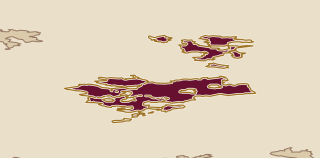
Transylvania's vineyards lie across the hilly Transylvanian Plateau, including the Someşan Plateau, Transylvanian Plain and Târnave Plateau. Vines are generally planted on sunny lower and middle slopes. Cool summers, cold winters, 1,900 to 2,000 annual sunshine hours and 500 to 700 mm of rainfall shape the season, while late frosts and hail remain hazards.
The region suits still and fine sparkling wines, particularly whites. Long, sunny autumns can also produce noble-rot wines with the traditional C.I.B. mention. Târnave is generally fresher and more acid-driven than warmer Transylvanian sites. In Lechinţa, frequent autumn fog and lower temperatures slow ripening while preserving aroma and high acidity.
Inside the region
5 named areas
Each guide keeps its place within Transylvania clear, with a direct route back to the map.
- 01AiudNo producers listed yetAiud is a wine area within Transylvania, Romania, with a protected Romanian DOC name.
- 02Alba IuliaNo producers listed yetDOC Alba Iulia covers still wines from the Transylvanian Plateau, made in the delimited Alba vineyard.
- 03LechinţaNo producers listed yetLechinţa is a protected DOC area in Bistriţa-Năsăud and Mureş. Frequent autumn fog slows ripening and helps retain aroma and high acidity. Its white wines range from dry to semi-sweet and sweet.
- 04Sebeş-ApoldNo producers listed yetDOC Sebeș-Apold is a still-wine designation in the Transylvanian Plateau, covering named localities in Alba and Sibiu counties.
- 05TârnaveNo producers listed yetWithin Transylvania, Târnave generally gives fresher, more acid-driven wines than warmer sites in the region.