
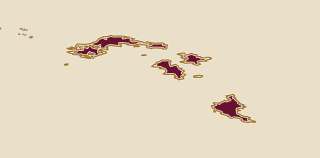
The Peloponnese includes very different wine areas, from Monemvasia in the south to the higher central zones around Nemea and Mantinia. Monemvasia-Malvasia sits at the foot of Mount Malevos. Its name became Malvasia through Venetian commerce, and production in Monemvasia returned at the beginning of the twenty-first century.
Nemea's red PDO, established in 1971, is made exclusively from Agiorgitiko. Classic wines have red fruit, sweet spice, a velvety texture and refreshing acidity. In central-eastern Arcadia, Mantinia's plateau averages 660 metres and nearby slopes reach 800 metres. Moschofilero leads its still dry and sparkling whites, with rose-scented wines from the plateau and more citrusy, higher-acid examples from the slopes.
Around Patras, mountainous and semi-mountainous Achaia produces Roditis whites under PDO Patra. The area also includes sweet red Mavrodaphne of Patras and sweet Muscat wines made from sun-dried grapes or by fortification.
Inside the region
7 named areas
Each guide keeps its place within Peloponnese clear, with a direct route back to the map.
- 01Mantinia2 producersMantinia's plateau and slopes produce fresh Moschofilero wines. Still whites range from rose-scented to citrusy, while traditional-method sparkling versions add yeasty, brioche-like notes.
- 02Mavrodafni PatronNo producers listed yetMavrodafni Patron is the Peloponnese area for sweet red wine made from Mavrodaphne.
- 03Monemvasia- MalvasiaNo producers listed yetThis southern Peloponnese wine area is linked to Monemvasia, at the foot of Mount Malevos.
- 04Moschato PatronNo producers listed yetMoschato Patron makes sweet white wines from sun-dried grapes or by fortification.
- 05Moschatos Riou PatrasNo producers listed yetMoschatos Riou Patras is a small coastal wine area east of Patras and Rio.
- 06Nemea3 producersNemea's red PDO wines are made exclusively from Agiorgitiko. Classic examples pair red fruit and sweet spice with a velvety texture and refreshing acidity.
- 07Patras1 producerPatras includes Roditis whites from mountainous Achaia, sweet red Mavrodaphne, and sweet Muscat wines. A smaller coastal Muscat zone lies east of Patras and Rio.
Producer profiles
Producer profiles
Open the full directory when you want every producer currently placed in Peloponnese.
- Cavino Winery and Distillery Aigio S.A.Founded in Aigio in 1958, CAVINO began with Greek varieties including Roditis, Lagorthi, Sideritis, Mavro Kalavritino and Mavrodaphne, and its wider wine story reaches into Achaia's mountain vineyards at Mega Spileo.
- Domaine SkourasDomaine Skouras in the northeastern Peloponnese, with Agiorgitiko, Moschofilero, high elevation Nemea vineyards and mixed vessel ageing.
- Kintonis WineryMountain winery in Aigialeia, Greece, farming 500 to 1,050m vineyards for naturally high-acid Moschofilero, Syrah and rosé.
- Ktima TseleposPeloponnese estate centered on Moschofilero, with Mantinia PDO, Gris de Nuit from Perpatiara, and Chardonnay Marmarias aged on fine lees.
Browse 2 more
- Mylonas WineryA three-generation Keratea winery in Attica, where Savatiano leads a dry-farmed range shaped by older vines, marine air and both steel and clay amphorae.
- Nestor WineryA Messinian cooperative winery with a dedicated Fileri vineyard and a textured rosé shaped by skin contact and lees ageing.