
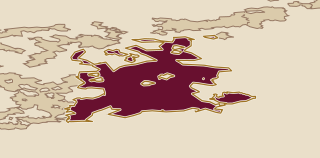
Duna was created in 2006 from the Csongrád, Hajós-Baja and Kunság wine districts. It covers roughly 35 to 40% of Hungary's vineyard area, bringing sandy plains, loess, and markedly dry inland conditions under one regional name.
Kunság is largely flat and frost-prone, with strong sunlight and soils that run from floodplain sediments to sandy ridges. Its quartz-rich sand protected vines from phylloxera and prompted extensive planting, although some parts had grown vines continuously since the Árpád era. Kunság also has Hungary's largest area of Ezerjó.
Further south, Csongrád pairs intense sunshine with Kadarka and Kékfrankos reds. Hajós-Baja combines loess and sand with a Swabian wine culture established by German settlers. Duna wineries modernised after Hungary joined the EU, and quality became more established by the 2020s.
Inside the region
7 named areas
Each guide keeps its place within Duna clear, with a direct route back to the map.
- 01Csongrád1 producerCsongrád is a dry, sunny part of Duna with Hungary's highest sunshine total. Its low-lying vineyards include sandy loam, brown forest soil and chernozem, while Kadarka and Kékfrankos are its best-known red-wine names.
- 02DunaNo producers listed yetThis Duna wine area belongs to the wider Duna region, created in 2006 from Csongrád, Hajós-Baja and Kunság. That wider region accounts for roughly 35 to 40% of Hungary's vineyard area.
- 03Hajós-BajaNo producers listed yetBeside Kunság and west of the Danube, Hajós-Baja has loess mixed with sand and a Swabian wine culture shaped by German settlers brought to Hajós in 1722.
- 04Izsáki Arany SárfehérNo producers listed yetThis Duna wine area is for white wines from Arany Sárfehér, once called Izsáki Sárfehér. Reductive examples are greenish-yellow, light and lively.
- 05KunságNo producers listed yetKunság is a wide, mostly low-lying part of Duna, with dry continental conditions and soils from sand to loess. Fresh fruity reds, easy-drinking rosés and Ezerjó are central to the picture.
- 06MonorNo producers listed yetMonor's vineyards sit on the Gödöllő-Monor Hills at about 200 metres. Local wines are described as flavour-rich, low in acid and relatively high in alcohol.
- 07SoltvadkertiNo producers listed yetSoltvadkerti makes Ezerjó as white and sparkling wine. Local producers also range from accessible fruity wines to fuller reds with limited oak.