
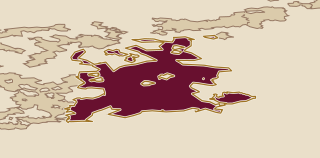
Csongrád is a low-lying wine area within Duna, mostly below 120 metres. It records Hungary's highest sunshine total, about 2,200 hours, yet annual rainfall is only about 450 to 500 mm. In July, it can fall to 10 mm. The Tisza, Körös and Maros affect local moisture and humidity. Alluvial sandy loam, brown forest soil and chernozem occur in its vineyards. Kadarka and Kékfrankos are the reds most closely associated with Csongrád. The area struggled after communism, but new wineries and younger producers have since emerged.
Elsewhere in Duna
Continue through the region
- DunaNo producers listed yetThis Duna wine area belongs to the wider Duna region, created in 2006 from Csongrád, Hajós-Baja and Kunság. That wider region accounts for roughly 35 to 40% of Hungary's vineyard area.
- Hajós-BajaNo producers listed yetBeside Kunság and west of the Danube, Hajós-Baja has loess mixed with sand and a Swabian wine culture shaped by German settlers brought to Hajós in 1722.
- Izsáki Arany SárfehérNo producers listed yetThis Duna wine area is for white wines from Arany Sárfehér, once called Izsáki Sárfehér. Reductive examples are greenish-yellow, light and lively.
- KunságNo producers listed yetKunság is a wide, mostly low-lying part of Duna, with dry continental conditions and soils from sand to loess. Fresh fruity reds, easy-drinking rosés and Ezerjó are central to the picture.
- MonorNo producers listed yetMonor's vineyards sit on the Gödöllő-Monor Hills at about 200 metres. Local wines are described as flavour-rich, low in acid and relatively high in alcohol.
- SoltvadkertiNo producers listed yetSoltvadkerti makes Ezerjó as white and sparkling wine. Local producers also range from accessible fruity wines to fuller reds with limited oak.