
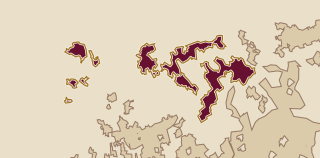
Pannonhalma covers 560 hectares in the Sokoró Hills, between the Small Hungarian Plain and the Transdanubian Mountains. Vineyards appear in the founding charter of Pannonhalma Abbey, dated 1001-1002, which mentions vineyards belonging to the abbey estate. White varieties cover much of the area, with Kékfrankos, Merlot, Pinot Noir, Cabernet Franc and Cabernet Sauvignon also grown for red wines. Pannonhalma and Pannonhalmi are registered Hungarian protected wine names.
Elsewhere in Upper Pannon
Continue through the region
- Etyek-Buda1 producerCool conditions and limestone soils shape Etyek-Buda's light-bodied, full-flavoured still and sparkling wines. Chardonnay, Sauvignon Blanc, Riesling and Pinot Noir are important varieties here.
- MórNo producers listed yetMór is closely tied to Ezerjó, its signature white grape. It became nearly dominant after phylloxera because it gave reliable yields and remains the area's defining variety.
- NeszmélyNo producers listed yetNeszmély is known for light, fruity white wines. It receives 1,900-2,000 sunshine hours a year and was established as a wine region in 1897.
- SopronNo producers listed yetLake Fertő gives Sopron a slightly warmer setting within Upper Pannon, supporting fuller reds. Kékfrankos is the key grape, joined by Cabernet Franc, Syrah, fresh whites and sparkling wines.