
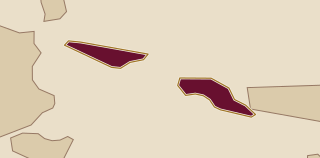
Mountains surround the Breede River Valley on three sides, but the region is divided among Breedekloof, Robertson and Worcester. Chenin Blanc runs across all three districts in dry, sweet and sparkling wines.
Breedekloof has alluvial valley soils over river stones, with soils and mesoclimates changing between valleys. Robertson has marked shifts between daytime and nighttime temperatures, plus limestone pockets comparable to those associated with Chablis. Chardonnay from those limestone soils is described as minerally and unwooded, while Calcrete is reserved for specially selected Chardonnay from Bonnievale-Robertson.
Worcester is very dry and relies largely on the Breede River for irrigation. High-altitude Stettyn suits slower-ripening Sauvignon Blanc, Nuy's lime-rich clay is associated with Chardonnay and Colombar, and Scherpenheuvel, the driest ward, ripens earlier. The district remains tied to brandy while moving toward more estate-branded wines.
Inside the region
3 named areas
Each guide keeps its place within Breede River Valley clear, with a direct route back to the map.
- 01Breedekloof1 producerBreedekloof's river valleys have alluvial soils over river stones, with changes in soil and mesoclimate from one valley to the next. The area includes Goudini and Slanghoek, and local winemakers formed the Breedekloof Makers Initiative around Chenin Blanc in 2014.
- 02Robertson4 producersRobertson sits within Breede River Valley, where marked shifts between daytime and nighttime temperatures meet pockets of limestone. Chardonnay from those soils is described as minerally and unwooded. Calcrete is a specially selected Chardonnay category from the Bonnievale-Robertson area.
- 03WorcesterNo producers listed yetWorcester is South Africa's largest wine district by area and volume. It is dry, and the Breede River feeds most irrigation schemes. High-altitude Stettyn suits slower-ripening Sauvignon Blanc, while Nuy and Scherpenheuvel bring different soils and growing conditions.