
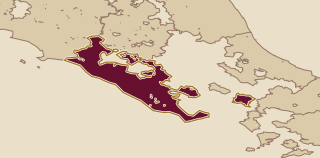
Cesanese is an important native black grape in Lazio, and it gives Ciociaria & Cesanese Hills its clearest wine anchor. Cesanese del Piglio DOCG vineyards lie on the slopes of the Monti Ernici in Frosinone Province, between 200 and 600 metres. Clay-to-sandy soils give these reds a distinctly hill-grown setting. The production area includes Piglio and Serrone, along with parts of Acuto, Anagni and Paliano.
Elsewhere in Lazio
Continue through the region
- Castelli Romani & Colli Albani3 producersVolcanic soils and nearby lakes shape Castelli Romani & Colli Albani. Its DOC wines range from dry and sparkling styles to fresh reds and fruity novello bottlings.
- Pontine Plain & Southern Tyrrhenian Coast1 producerCirceo anchors this coastal area with fresh whites that show citrus and apple aromas, alongside Merlot-based reds and rosatos.
- Rome Northern Fringe & SabinaNo producers listed yetRoma DOC includes Sabina Romana within a wider mix of coastal and inland zones. Sedimentary and volcanic soils meet dry summer weather and wide day-night temperature shifts.
- Tuscia / Viterbo (Etruria)No producers listed yetTuscia / Viterbo includes Aleatico di Gradoli, Colli Etruschi Viterbesi, Tarquinia and Vignanello.