
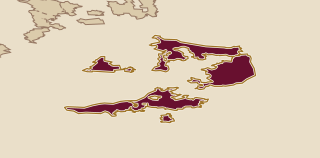
Dobrogea lies in southeastern Romania between the Danube and the Black Sea, with the Măcin Mountains along its edge. Greek colonists were among the first people to grow vines here, at least 2,700 years ago. In 1903, northern Dobrogea alone had 5,800 hectares of vineyard and produced about 305,000 hectolitres of wine each year.
Its six protected designations are Adamclisi, Babadag, Murfatlar, Oltina, Sarica Niculiţel and Însurăţei. Plateaus, alluvial hills and differing microclimates give these places distinct profiles. Murfatlar makes full-bodied, velvety wines, while Adamclisi is known for mineral whites and medium-bodied reds. Babadag has balanced, acidic whites and crisp red-fruited rosés. Oltina ranges from fruity whites to dark, full-bodied reds, and Însurăţei combines freshness and slightly higher acidity with whites that run from dry to sweet and gently tannic reds.
Inside the region
6 named areas
Each guide keeps its place within Dobrogea clear, with a direct route back to the map.
- 01AdamclisiNo producers listed yetAdamclisi's soils distinguish its mineral whites and medium-bodied reds from nearby areas. Less mist than at Danube-side Oltina accompanies earlier maturity and rounder, velvety wines.
- 02BabadagNo producers listed yetBabadag makes balanced, acidic whites and crisp rosés with strawberry, cherry and raspberry aromas.
- 03ÎnsurăţeiNo producers listed yetÎnsurăţei's sandy soils support fresh, balanced wines with slightly higher acidity. Its whites range from dry to sweet, while its reds are gently tannic and full-bodied.
- 04MurfatlarNo producers listed yetMurfatlar is a warm, dry part of Dobrogea with high solar resources and calcium-rich limestone soils. The Black Sea helps regulate temperatures in autumn.
- 05OltinaNo producers listed yetDanube-side Oltina makes fruity, acidic whites, fresh forest-fruit rosés and dark, full-bodied reds.
- 06Sarica NiculiţelNo producers listed yetSarica Niculiţel is a protected wine designation within Dobrogea, Romania.