
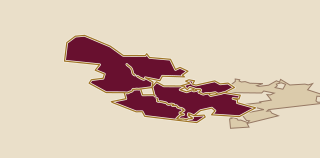
Médoc occupies the Left Bank between the Atlantic and the Gironde estuary. Cabernet Sauvignon usually leads the red blend, with Merlot adding flesh and Cabernet Franc and Petit Verdot in smaller roles. Gravel ridges drain readily and suit Cabernet, while clay and sand alter the balance from estate to estate. The name can mean the whole peninsula or the Médoc appellation at its northern end, so the exact wording matters.
The commune chain changes the emphasis
Margaux is the southern, often most perfumed reference. Saint-Julien sits in the middle with a reputation for balance. Pauillac is associated with cassis, graphite and firm structure. Saint-Estèphe, farther north, includes more clay and often feels sturdier. Listrac-Médoc and Moulis-en-Médoc lie inland; Haut-Médoc and Médoc cover broader areas around and beyond the famous communes.
Eight appellations organise the peninsula
Read Margaux, Saint-Julien, Pauillac and Saint-Estèphe as the four best-known commune appellations. Add Moulis-en-Médoc and Listrac-Médoc, then the wider Haut-Médoc and Médoc. The 1855 classification ranks many estates in the area, but its growth title belongs to the château, not automatically to every nearby vineyard or bottle. Appellation and producer remain separate clues.
A useful way in
Begin outside the first-growth orbit
Start with Haut-Médoc, Médoc, Moulis or Listrac from a dependable estate. Then compare it with a bottle from Margaux, Saint-Julien, Pauillac or Saint-Estèphe. Keep the vintage close. The first bottle teaches the Cabernet-led frame; the second shows how a commune and producer sharpen it.
Elsewhere in Bordeaux
Continue through the region
- Bourg & Blaye22 producersBourg & Blaye is Bordeaux's Right Bank estuary country, centred on Merlot-led reds from Côtes de Bourg and Blaye Côtes de Bordeaux.
- Entre-Deux-Mers11 producersBetween the Garonne and Dordogne, Entre-Deux-Mers is known mainly for crisp dry whites and broadly priced Bordeaux wines.
- Graves & Pessac-Léognan20 producersSouth of Bordeaux, Graves and Pessac-Léognan place structured reds and ageworthy dry whites on the same gravel ground.
- Libournais36 producersEast of the Dordogne, Libournais brings together Saint-Émilion, Pomerol and Fronsac. Merlot and Cabernet Franc lead on clay, limestone, gravel and sand.
- Sauternes & Sweet Wines19 producersMorning mist, afternoon sun and noble rot turn Sémillon into Bordeaux's most concentrated sweet wines around Sauternes and Barsac.
A considered starting point
Producers in Médoc
- Château Calon-SégurA Saint-Estèphe Third Growth with gravel over clay, a Cabernet led Grand Vin, and parcel by parcel fermentation.
- Château LagrangeA Cabernet Sauvignon led Saint-Julien Third Growth shaped by higher gravelly slopes, 103 mapped parcels and two distinct estate wines.
- Château Lynch-BagesPauillac estate with a concentrated red, Echo de Lynch-Bages and a white of Sauvignon Blanc, Sémillon and Muscadelle.
- Château MargauxMédoc First Growth estate with Cabernet Sauvignon led reds, a Sauvignon Blanc white, and organic farming.
- Château Pontet CanetChâteau Pontet-Canet is a Pauillac Fifth Growth with certified organic and biodynamic farming, a Cabernet Sauvignon-led 2020 blend, and maturation in new oak, concrete amphora and used barrels.
Browse 53 more
- Château Beau-Site Haut-VignobleSaint-Estèphe château with gravel, clay and a 2016 red blend of Cabernet Sauvignon, Merlot and Petit Verdot.
- Château BernadotteSaint-Sauveur Haut-Médoc estate making Cabernet Sauvignon led red wine with French oak ageing and a second label named Le Fournas Bernadotte.
- Chateau BlaignanNorthern Médoc Cru Bourgeois estate with Merlot and Cabernet Sauvignon, two limestone hills, and two named cuvées.
- Chateau Bois CardonValeyrac Médoc red made by Château Le Bourdieu, with oak ageing and soft berry fruit in the 2023 vintage.
- Château CamensacHaut-Médoc Fifth Growth making Cabernet Sauvignon and Merlot reds from hand sorted grapes with oak ageing.
- Château Chasse-SpleenMoulis-en-Médoc château where Garonne gravels meet limestone beneath Cabernet Sauvignon led red Bordeaux.
- Château Clerc MilonPauillac Grand Cru Classé estate with one vineyard holding, old Cabernet Sauvignon and Carmenere vines, and two named wines.
- Château Croizet-BagesPauillac château on Garonne gravel, with Cabernet Sauvignon led reds and a second wine, La Tourelle de Croizet-Bages.
- Château Dasvin-Bel-AirTessandier family Cru Bourgeois red from Haut-Médoc, with barrel ageing and vintage notes from fresh cassis to dark fruit and savoury spice.
- Chateau de LaugaBRUN family estate cared for across seven generations in Cussac-Fort-Médoc, with Haut-Médoc red wines.
- Chateau des AnnerauxLalande de Pomerol estate with Merlot led wines, organic farming and agroecological work under Benjamin Hessel.
- Château Ducru-BeaucaillouSaint-Julien Second Growth with gravel stones, French oak ageing, and wines from Château Ducru-Beaucaillou to La Croix.
- Château Duhart-MilonHaut-Médoc estate with Cabernet Sauvignon and Merlot, a French oak aged grand vin, and Moulin de Duhart as its second wine.
- Château Fon du BergerFamily-run Bordeaux estate with Cru Bourgeois Haut-Médoc and Pauillac aged in French oak.
- Château GloriaBordeaux château making Cabernet led red wine under Haut-Médoc and Médoc appellation labels.
- Chateau Graves de PezChateau Graves de Pez comes from Bordeaux, France.
- Château Haut-Bages-LibéralPauillac Fifth Growth with Cabernet Sauvignon and Merlot, organic and biodynamic certified, making a grand vin aged in oak.
- Château La BridaneSaint-Julien family property with deep gravel, Cabernet Sauvignon led planting, and three Bordeaux labels.
- Château La Grave à PomerolPomerol estate on the western plateau, planted to Merlot and Cabernet Franc, with a silky red.
- Château la Tour de ByNorthern Médoc château making Cabernet Sauvignon led reds from gravel soils, fermented in wood and aged in French oak.
- Château LabadieDupuy family château in Mombrier, Côtes de Bourg, with 70 hectares planted to Merlot, Cabernet Franc, Cabernet Sauvignon and Malbec.
- Château Lafite RothschildA Pauillac first growth with a Cabernet Sauvignon-led vineyard, an estate cooperage and two principal wines.
- Château LatourPauillac First Growth with three named wines released when ready to drink.
- Château Léoville Las CasesSaint Julien château with a Cabernet Sauvignon led Grand Vin, deep gravel at the Grand Clos, and a firm style built for long ageing.
- Château Léoville-PoyferréClassified Saint-Julien château with an 80 hectare vineyard, a Cabernet Sauvignon led grand vin and parcel by parcel vinification.
- Château Les Ormes De PezA Merlot-led Cru Bourgeois red from Saint-Estèphe, with fresh cherry, black fruit, rounded tannins and lingering freshness.
- Château Les ParuadesA 3.5-hectare Macau en Médoc estate making a Cabernet Sauvignon-led red from clayey palus soil, with rose petals, dark berries, firm tannins and a smooth finish.
- Château LiotsA multigenerational Sauternes estate with Château Liot and Château du Levant 2023.
- Chateau MalescasseHaut-Médoc château with oak-aged red wine, secondary labels and a 2022 blend of Cabernet Sauvignon, Merlot and Petit Verdot.
- Château Mauvesin BartonMoulis-en-Médoc estate making Cabernet Sauvignon led red Haut-Médoc in French oak.
- Château Mayne Lalande - Bernard LartigueChâteau Mayne Lalande is a Listrac-Médoc estate founded by Bernard Lartigue, who began developing it in 1975 and made its first vintage in 1982.
- Château MontroseSaint-Estèphe Second Growth with hillside gravel soils, a dense grand vin, and three estate wines.
- Château Mouton RothschildChâteau Mouton Rothschild is a Pauillac First Growth shaped by deep gravel, Cabernet Sauvignon, old vines, and a contemporary art label tradition.
- Château PalmerMargaux Third Growth with a gravel, sand and clay plateau, a 2022 grand vin, and Alter Ego from dedicated plots.
- Château PedesclauxPauillac Fifth Growth with organic vineyards, Cabernet Sauvignon led plantings, and a gravity fed winery designed to preserve grape aromas.
- Château PeyrabonHaut Médoc estate on a gravelly ridge near Pauillac, with a separate Pauillac label in La Fleur Peyrabon.
- Château Phelan Segur SceaA Bordeaux château making red Haut-Médoc wine with stainless steel fermentation and French oak élevage.
- Château Phélan-SégurSaint-Estèphe estate founded from two vineyard properties, with a grand vin aged in French oak and built for several decades of cellaring.
- Château Pichon Longueville Comtesse de LalandePauillac Second Growth with gravel over clay, Cabernet Sauvignon led wines, and a gravity fed cellar.
- Château Pichon-Longueville-BaronPauillac Second Growth making Cabernet Sauvignon led reds across vintage bottlings, with Les Tourelles de Longueville as its second wine.
- Château PotensacNorth Médoc estate in Ordonnac, making classic Bordeaux reds aged in French oak.
- Château PoujeauxChâteau Poujeaux makes Cabernet led Moulis reds from gravel based vineyards, fermented as whole berries and aged in French oak.
- Château PoujeaxMoulis reds led by Cabernet Sauvignon, with sustainable vineyard work and a named second and third wine.
- Chateau Segue Longue MonnierChâteau Ségue Longue Monnier is a Médoc Cru Bourgeois producer whose 2011 and 2012 vintages earned Concours de Bordeaux medals.
- Chateau Sociando-MalletSaint-Seurin-de-Cadourne Haut-Médoc estate, bought by Jean Gautreau in 1969, with Merlot led reds and French oak ageing.
- Château TalbotSaint-Julien Château built around Cabernet Sauvignon, French oak ageing and long lived red wine.
- Château TayacCôtes de Bourg estate with south facing vines, barrel aged red cuvées, and a white blend of Sauvignon, Sémillon and Muscadelle.
- Château TayetBordeaux Supérieur reds from Château Tayet, including cuvées linked to older parcels and siliceous soils.
- Château Tronquoy LalandeSaint Estèphe estate with Merlot and Cabernet Sauvignon reds, plus a Sémillon and Sauvignon Gris Blanc matured on lees.
- Les Domaines Barons de Rothschild LafiteLes Domaines Barons de Rothschild Lafite is the Bordeaux group built around Château Lafite Rothschild in Pauillac, with Château Anseillan Haut-Médoc and Les Légendes Bordeaux Rouge and Blanc extending the range beyond the First Growth château.
- Les Domaines DelonFour Delon properties across Saint Julien, Pomerol and northern Médoc, from Léoville-Las-Cases to Château Nénin.
- SCEA Terres BordelaisesA Bordeaux portfolio operation behind château labels ranging from dry white Bordeaux and Graves to Sauternes and Bordeaux red.
- SCEA Vignobles Cruchon et FilsThe Cruchon family’s Château Les Trois Manoirs is a Médoc red anchored by a 2015 blend of Cabernet Sauvignon, Merlot and three smaller supporting grapes.