
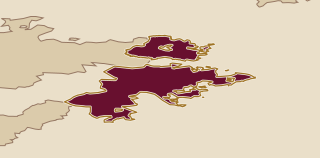
A route through Levante
Named wine places
- 01Jumilla
- 02Yecla
- 03Bullas
- 04Alicante
- 05Valencia
- 06Utiel-Requena
Begin in Jumilla. From there, move through Yecla, Bullas, Alicante and keep the wider region in view as you go.
Inside the region
1 named area
Each guide keeps its place within Levante clear, with a direct route back to the map.
Producer profiles
Producer profiles
Open the full directory when you want every producer currently placed in Levante.
- Bodega AranleonOrganic Bobal estate on a 1927 stone cellar in Utiel-Requena, inland Valencia, making two honest Solo-label bottles: a rounded red blend and a Macabeo-based Cava Brut.
- Bodega Asensio CarcelénOrganic Jumilla winery growing Monastrell on dry-land hand-harvested bush vines, four generations of the Carcelén family farming the same chalky plateau.
- Bodega Chozas Carrascal S.L.Single-estate organic winery in Valencia's Utiel-Requena highlands, holder of Spain's most specific single-vineyard classification, built from scratch by two founders on uncultivated land in 1990.
Browse 27 more
- Bodega Madrid RomeroA family estate in Jumilla at 1,372 metres, built by a former radio journalist on her father's agricultural foundations.
- Bodegas AlejandroAlicante bodega working with Monastrell, Merseguera and Chardonnay blends, with Arbui V.
- Bodegas Antonio ArraezValencia winery led by its third generation, with native grape varieties and a Jumilla Monastrell red aged in French oak.
- Bodegas BledaJumilla bodega behind Pino Doncel reds and Castillo de Jumilla wines, first in Jumilla to bottle its own produce.
- Bodegas BSIJumilla cooperative bodega with the largest ungrafted Monastrell vine holdings in the D.
- Bodegas CastañoFamily estate in Yecla, Murcia, farming around 500 hectares of Monastrell on limestone, clay, and stony soils; the house that helped pull the grape from bulk production into bottled wine.
- Bodegas Castaño SLFounded in 1950, Bodegas Castaño cultivates Monastrell across Yecla, pairing longstanding vineyard work with organic farming practices.
- Bodegas DelampaFamily winery founded in 1921 in Jumilla, farming Monastrell at 900 metres on dry, stony soils.
- Bodegas E. Mendoza, SLUFamily bodega in Alicante with organic viticulture and a Pinot Noir red aged in Allier French oak.
- Bodegas Hijos de Juan GilOld-vine Jumilla Monastrell producer and headquarters of Viñas Familia Gil, a family group of eleven Spanish wineries founded in 1916 by a stonemason.
- Bodegas Juan GilBodegas Juan Gil is a Jumilla producer rooted in the Gil family’s early-20th-century wine tradition, centered on Monastrell and organic vineyard farming.
- Bodegas LuzonA Jumilla estate founded in 1841, farmed by women of the Molina family for nearly 140 years, producing certified organic Monastrell from 500 hectares of high-altitude vineyard in southeastern Spain.
- Bodegas MurviedroCentury-old Valencian winery in DO Utiel-Requena, farming Bobal on high-altitude chalk-clay soils and producing old-vine reds that carry the plateau's density and mineral grip.
- Bodegas Santa MargaritaA 2003 Castilian estate farming 140 hectares under the Tierra de Castilla IGP, with a generational nursery heritage and a three-tier portfolio running from award-winning Hoya Hermosa to the naturally blue Euforia frizzante.
- Bodegas Silvano GarcíaA century-old Jumilla family bodega led by the third-generation owner who also chairs the DOP Regulatory Council governing every winery in the appellation.
- Bruto Vitícola Bodegas Juan GilFamily estate in Jumilla, Murcia, built on 750-plus hectares of old unirrigated Monastrell bush vines, with the Bruto project bringing together a winemaker, a Spanish actor, and a Murcian artist around one serious oak-aged wine.
- BVC BodegasFrench-owned négociant in Requena shipping 10 million bottles a year under nine international labels, with Toro Loco as its most visible Spanish brand.
- Casa CastilloEstate winery in the Jumilla appellation farming Monastrell, Garnacha and Syrah as dry-land bush vines at 700 metres on the northern slopes of Sierra de El Molar.
- Casa Los FrailesSingle-estate Monastrell from calcareous limestone hills in inland Valencia, farmed without synthetic inputs for over 25 years and aged in old concrete and buried clay amphoras.
- Celler del RoureValencia estate recovering pre-phylloxera indigenous varieties and ageing selected wines in buried earthenware tinajas.
- Ego BodegasJumilla producer with principally Monastrell vineyards and a named portfolio including Gorú.
- Finca Los FrailesValencia estate with biodynamic vineyards, Jesuit built cellar vessels and the citrus led white Blanc de Trilogía.
- J. García CarriónJumilla family winery founded in 1890, now the largest in Europe, producing Monastrell from the Mediterranean plateau of Murcia across three decades of oak-ageing tiers.
- Parajes del Valle Bodegas y Viñedos S.LOrganic Jumilla wines shaped by dry, elevated vineyards: textured skin-contact Macabeo and ripe, spicy Monastrell.
- Tarbal Food SLU - Bodegas SauraMountain-grown Monastrell and Fine Grenache from rain-fed bush vines in Bullas, shaped in limestone tanks and French oak.
- Viña Elena BodegaFour-generation family estate farming Monastrell organically in the Estrecho de Marín valley, DOP Jumilla, since 1948.
- Viñedos Y Bodegas XenyselOld-vine Monastrell estate in Jumilla's Hoya de Torres Valley, farming 70 hectares of ungrafted Pie Franco vines over 60 years old under full ecological practices.