
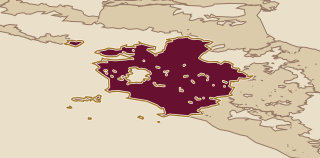
Within Toscana, Chianti Hills includes Chianti, Chianti Classico, Vin Santo del Chianti, Vin Santo del Chianti Classico, Colli dell'Etruria Centrale, Bianco dell'Empolese, Grance Senesi, Val d'Arbia, Val d'Arno di Sopra and Terre di Casole. Chianti Classico refers to historic central Chianti, rather than the whole Chianti appellation.
Elsewhere in Toscana
Continue through the region
- Bolgheri & Etruscan Coast18 producersBolgheri & Etruscan Coast has modern plantings of Cabernet Sauvignon, Cabernet Franc, Merlot, Petit Verdot, Syrah and Sangiovese. Its soils include sandy clay loam, deep alkaline ground, fine gravel and fossil shells.
- Carmignano & Prato HillsNo producers listed yetCarmignano & Prato Hills includes Carmignano, Barco Reale di Carmignano and Vin Santo di Carmignano. Grand Duke Cosimo III formally defined Carmignano in 1716.
- Elba IslandNo producers listed yetElba Island is a wine area within Toscana, with Elba and Elba Aleatico Passito as its listed appellations.
- Lucca, Apuane & Northern Coast4 producersLucca, Apuane & Northern Coast is a wine area within Toscana, with Colline Lucchesi, Montecarlo and Candia dei Colli Apuani among its listed appellations.
- Maremma Grosseto6 producersMaremma Grosseto is a wine area within Toscana. Its listed appellations include Maremma toscana, Morellino di Scansano, Monteregio di Massa Marittima and Bianco di Pitigliano.
- Montalcino22 producersMontalcino's wine zone follows the historic municipality, between the Ombrone, Asso and Orcia rivers. Soils vary across the hill, and higher vineyards tend to produce more aromatic, softer wines than valley-floor sites.
- Montepulciano & Valdichiana13 producersVino Nobile di Montepulciano is one of the listed appellations in Montepulciano & Valdichiana. It uses 70-100% Sangiovese, locally called Prugnolo Gentile, and its Pieve designation received provisional publication in 2024.
- San Gimignano & Sienese Hills2 producersSan Gimignano & Sienese Hills includes Vernaccia di San Gimignano, a dry white with freshness, savouriness, medium body and persistence.
Producer profiles
Producers in Chianti Hills
- Azienda Agricola Biologica La Casa di BriccianoA family-run Tuscan organic farm, La Casa di Bricciano pairs farming established in 1992 with shallow, shale-rich soils.
- Azienda Agricola IL Palagio di Panzano di Monia PicciniMonia Piccini makes Sangiovese-only wines from her family's estate above Panzano in Chianti, where two contrasting soil formations pull each parcel in a different direction.
- Azienda Tenuta Canto Alla MoraiaOrganic Supertuscan estate in Castiglion Fibocchi making one Cabernet-led blend, Moraia, from certified organic vines at 300 metres in the Arno valley hills.
- BrancaiaChianti producer founded in Castellina in Chianti, with Chianti Classico reds, Brancaia No 2 from Maremma Toscana, and Stella sparkling wine.
- Cantina BonacchiFour-generation Tuscan family farming 78 hectares across Chianti Montalbano, Chianti Classico, Brunello di Montalcino, and Bolgheri, producing over three million bottles a year under Andrea Bonacchi.
- CANTINA SOCIALE COLLI FIORENTINIThe world's largest Chianti producer by volume: a cooperative of 350 farming families in the Florentine hills, making Sangiovese-led Chianti Colli Fiorentini DOCG on solar energy from 1,500 hectares.
Browse 61 more
- CarpinetoFive-appellation Tuscan estate founded in 1967 in Chianti Classico, farming Sangiovese across Brunello di Montalcino, Vino Nobile di Montepulciano, and IGT tiers under single family ownership.
- Casa Vinicola Alberto BartaliA Tuscan family estate founded in 1927 near the medieval hill-town of Monteriggioni, producing Chianti, Chianti Classico, Brunello di Montalcino, and Vernaccia di San Gimignano from its own farming estates.
- Casa Vinicola Luigi CecchiA four-generation Tuscan family company founded in 1893, based in Castellina in Chianti, making Sangiovese-led Chianti Classico from five estates across Tuscany and Umbria.
- Casa Vinicola Luigi Cecchi & FigliTuscan family wine house founded in 1893 by professional taster Luigi Cecchi, headquartered in Castellina in Chianti with four Tuscan estates and one in Umbria spanning Chianti Classico, Maremma, Brunello di Montalcino and Sagrantino di Montefalco.
- Castellani S.p.A.Tuscan family wine company founded in 1903, operating five estates across the region with a range from stainless-steel Chianti DOCG to Brunello di Montalcino.
- Castello dei RampollaA family estate in Panzano in Chianti with land held since 1739, making biodynamic Chianti Classico and two IGT reds from Sangiovese, Cabernet Sauvignon and Petit Verdot.
- Castello della PanerettaOld-vine Sangiovese and Canaiolo Nero estate on Chianti Classico's western edge, farming eight named parcels across contrasting galestro, schist, and hilltop soils since the Albisetti family arrived in 1984.
- Castello di AmaChianti Classico estate in Gaiole, founded 1976, producing Sangiovese-led wines from four named vineyard valleys at 430 to 527 metres, with San Lorenzo Gran Selezione as the flagship.
- Castello di BossiA fully organic Chianti Classico estate in Castelnuovo Berardenga, the southernmost commune of the zone, owned by the Bacci family since 1984.
- Castello di GabbianoA 165-hectare Chianti Classico estate on the Florence-Siena corridor, with documented wine production since 1480 and a cellar program since 2011 built around precise extraction and direct fruit.
- Castello di MeletoA large organic estate in Gaiole in Chianti, farming 130 hectares of Sangiovese under the Chianti Classico appellation, rescued from abandonment in 1968 by a public share-offering called Operazione Vigneti.
- Castello di MonsantoFamily estate in Chianti Classico's San Donato in Poggio subzone, built around Il Poggio, the first single-vineyard Chianti Classico Riserva to name its source parcel on the label.
- Castello di MonterinaldiChianti Classico estate on a medieval hill between Panzano and Radda, farming 17 individually mapped Sangiovese parcels on galestro and pietraforte at 400 metres.
- DievoleChianti Classico estate in Castelnuovo Berardenga, first recorded in 1090, organically farmed across 158 hectares, producing single-vineyard Sangiovese and a Riserva named for its 900 documented years.
- Famiglia CastellaniTuscan family producer with organic vineyards in the Pisan Hills, Chianti Classico Riserva, Vermentino and the coastal Guadalmare range.
- Famiglia CecchiFour-generation Tuscan producer based in Castellina in Chianti, farming Sangiovese across Chianti Classico, Morellino di Scansano, and Sagrantino di Montefalco through certified-organic estates.
- Fattoria AmoLorenzo Zonin farms Vernaccia di San Gimignano at 300 metres near San Gimignano on fossil-bearing soils, making an unfiltered still white and an ancestral-method sparkling wine that ships with its yeast sediment intact.
- Fattoria di CaspriBiodynamic natural-wine estate in the Arezzo hills, built by a French Alsatian oenologist on a mandate to make the most interference-free wine possible in Tuscany.
- Fattoria di FèlsinaA 600-hectare estate on the southeastern edge of Chianti Classico, farming Sangiovese on soils that shift from Chianti limestone toward the marine-sediment clays of the Crete Senesi.
- Fattoria FibbianoFamily estate in Pisa province's Era Valley farming fossil-marine hilltop soils with century-old Sangiovese clones and a full commitment to native Tuscan varieties.
- Fattoria Le FontiA small Panzano estate at 450 metres, family-owned since 1994, producing three tiers of Chianti Classico and the IGT Supertuscan Fontissimo from organically farmed Sangiovese vines.
- Fattoria Loppiano 4.0 Soc. Agr. Coop.Organic Chianti cooperative at Incisa Valdarno, rooted in the Focolare movement since 1973, making low-sulfite Sangiovese from woodland-insulated hillside vineyards.
- Fattoria MontelloriFourth-generation family estate in Fucecchio, western Florence province, farming 55 hectares across three parcels.
- Fattoria NittardiCertified-organic Chianti Classico estate near Castellina in Chianti, owned since 1981 by the Canali Femfert family, with a Michelangelo provenance and a forty-year running artist-label program on its signature bottling.
- Fattoria PoggerinoFamily-run Chianti Classico estate in Radda farming biologically on galestro soils at altitude, making two Sangiovese-led wines from 11 hectares of estate vines.
- Fattoria RignanaOrganic Chianti Classico estate on the Panzano rim, making Sangiovese-led wines from Galestro vineyards at altitude.
- Fattoria SelvapianaOrganic Chianti Rufina estate at the foot of the Apennines, farming Sangiovese since the Giuntini family's 1827 acquisition.
- Fattoria ViticcioOrganic Chianti Classico estate in Greve in Chianti, farming Sangiovese and international varieties across hillside vineyards since 1964, with a range extending from Chianti Classico DOCG through a Cabernet Sauvignon and Merlot IGT to a coastal Bolgheri Rosso DOC.
- FontodiFontodi farms 90 hectares of Sangiovese in Panzano's Conca d'Oro, producing Chianti Classico and the 100% Sangiovese Flaccianello della Pieve.
- GranducatoLong-established Chianti Classico producer at elevation in Radda in Chianti, making Sangiovese-led reds aged in large oak.
- Isole e OlenaChianti Classico estate in San Donato in Poggio making Sangiovese-led appellation wine and the estate Sangiovese IGT Cepparello from 56 hectares of galestro and marly schist at 350 to 450 metres.
- Marchesi AntinoriMarchesi Antinori is a Tuscan wine producer whose family winemaking story began in Florence in 1385 and spans twenty-six generations.
- Marchesi FrescobaldiFlorentine merchant family making estate Chianti from eight Tuscan properties, with documented wine production at Nipozzano since the Renaissance.
- Marchesi MazzeiA Chianti Classico family with roots at Castello di Fonterutoli since 1435, farming Sangiovese on Alberese and sandstone across 114 parcels between 220 and 570 metres, with estates reaching to coastal Maremma and Noto in Sicily.
- Petrolo Società Agricola s.s.A Tuscany estate in the Val d'Arno di Sopra making two named-vineyard wines: Galatrona, a single-vineyard Merlot planted in 1990, and Bòggina, Sangiovese planted in 1947.
- Podere CionaSmall high-altitude Chianti Classico estate near Gaiole, built from scratch by the Gatteschi family since 1990, farming 5.4 hectares on quartz arenite and clay schist at up to 625 metres.
- Podere Il Carnasciale - Il Carnasciale s.r.l. società agricolaA five-hectare hilltop estate in Tuscany's Valdarno di Sopra, devoted entirely to Caberlot, a natural crossing of Cabernet Franc and Merlot found nowhere else in meaningful commercial quantity.
- Podere Poggio ScaletteFamily estate on Ruffoli hill in Greve in Chianti, growing Sangiovese on high-altitude Macigno sandstone.
- Poggio al SolePoggio al Sole is an organic, vegan-certified Chianti Classico estate in Tuscany, shaped by the Davaz family across two generations.
- RicasoliBarone Ricasoli makes Chianti Classico at Castello di Brolio, a fortified hill estate in Gaiole in Chianti where the family has owned land since 1141.
- Rocca delle MacìeLarge Chianti Classico estate founded in 1973 by film producer Italo Zingarelli at a restored medieval hamlet near Castellina.
- RuffinoLarge Tuscan house founded in Pontassieve in 1877, known for the Riserva Ducale range, a Chianti Classico-style Sangiovese blend with a royal origin story.
- San FeliceChianti Classico winery near Castelnuovo Berardenga, with Sangiovese at its core and a Vitiarium for native Tuscan grape research.
- Società Agricola Francesca s.a.s. di Loia Franca & COrganic family estate on clay-silt hills above the Arno in Empoli and San Miniato, producing Chianti DOCG reds and a Vermentino white from 25 hectares.
- Società Agricola Querciabella SpAChianti Classico estate founded in 1974 at Ruffoli above Greve in Chianti; Sangiovese-first, certified organic and vegan biodynamic since 2000.
- Tenuta Canto alla MoraiaCertified-organic Sangiovese estate on a Roman road in the eastern Chianti hills, farming high-density parcels at 300 metres in the province of Arezzo.
- Tenuta CarobbioA Panzano estate in the warm Conca d'Oro bowl, producing Chianti Classico from high-density Sangiovese vineyards and a separate track of varietal IGT crus in French oak.
- Tenuta di BibbianoTenuta di Bibbiano makes Sangiovese-only Chianti Classico from two named slopes in Castellina, on the western edge of the appellation.
- Tenuta Di CapraiaCastellina in Chianti estate managed by Rocca di Castagnoli, making Chianti Classico, Riserva and Gran Selezione wines.
- Tenuta di CarleoneA 6 to 7 hectare biodynamic Sangiovese estate in Radda in Chianti, run by Irish winemaker Sean O'Callaghan, known for long-macerated Sangiovese aged in cement and a Chianti Classico that won Gambero Rosso Tre Bicchieri in 2025.
- Tenuta di GhizzanoA 280-hectare estate in the Pisan hills, farmed biodynamically by the same family since 1370.
- Tenuta di LillianoFamily-owned Chianti Classico estate bottling Sangiovese from Alberese limestone since 1958, with a three-tier range from vintage Chianti Classico to Gran Selezione.
- Tenuta La MassaA 25-hectare estate in Panzano's Conca d'Oro making IGT Toscana wines from Sangiovese, Merlot, Cabernet Sauvignon, and Petit Verdot, alongside a single-parcel Sangiovese cru from plot six.
- Tenuta San JacopoEighteenth-century organic estate in Cavriglia, Tuscany, producing Sangiovese-led Chianti Superiore from 40 hectares of certified organic vineyards at 300 metres above sea level.
- Tenuta Sette PontiValdarno estate that began estate bottling in 1998 after four decades selling its grapes.
- Tenuta TreroseVino Nobile di Montepulciano estate on the Umbrian border, farming 103 hectares of Prugnolo Gentile across five named hills since 1982.
- Tenute PicciniFourth-generation Tuscan family group with five organically farmed estates spanning Chianti Classico, Brunello di Montalcino, Bolgheri, Aglianico del Vulture and Etna, still wholly family-owned after 140 years.
- TerrenoA 150-hectare Chianti Classico estate above Greve in Chianti, where the Swedish Ruhne family farms three vineyards between 300 and 500 metres of altitude, producing Sangiovese-led wines that carry the distinct character of each site.
- Terreno Società Agricola SrlSwedish-owned Chianti Classico estate outside Greve in Chianti, led by Sofia Ruhne since 2015.
- Villa di Geggiano - Az. Agr. Bianchi BandinelliFamily estate in Castelnuovo Berardenga at the southernmost edge of Chianti Classico, farming organically and producing Sangiovese-based reds from a property the same family has occupied since 1527.
- Villa MangiacaneOrganic Chianti Classico estate 12 km south of Florence, restored from a Renaissance villa that served as a German command post and Allied hospital during the Second World War.